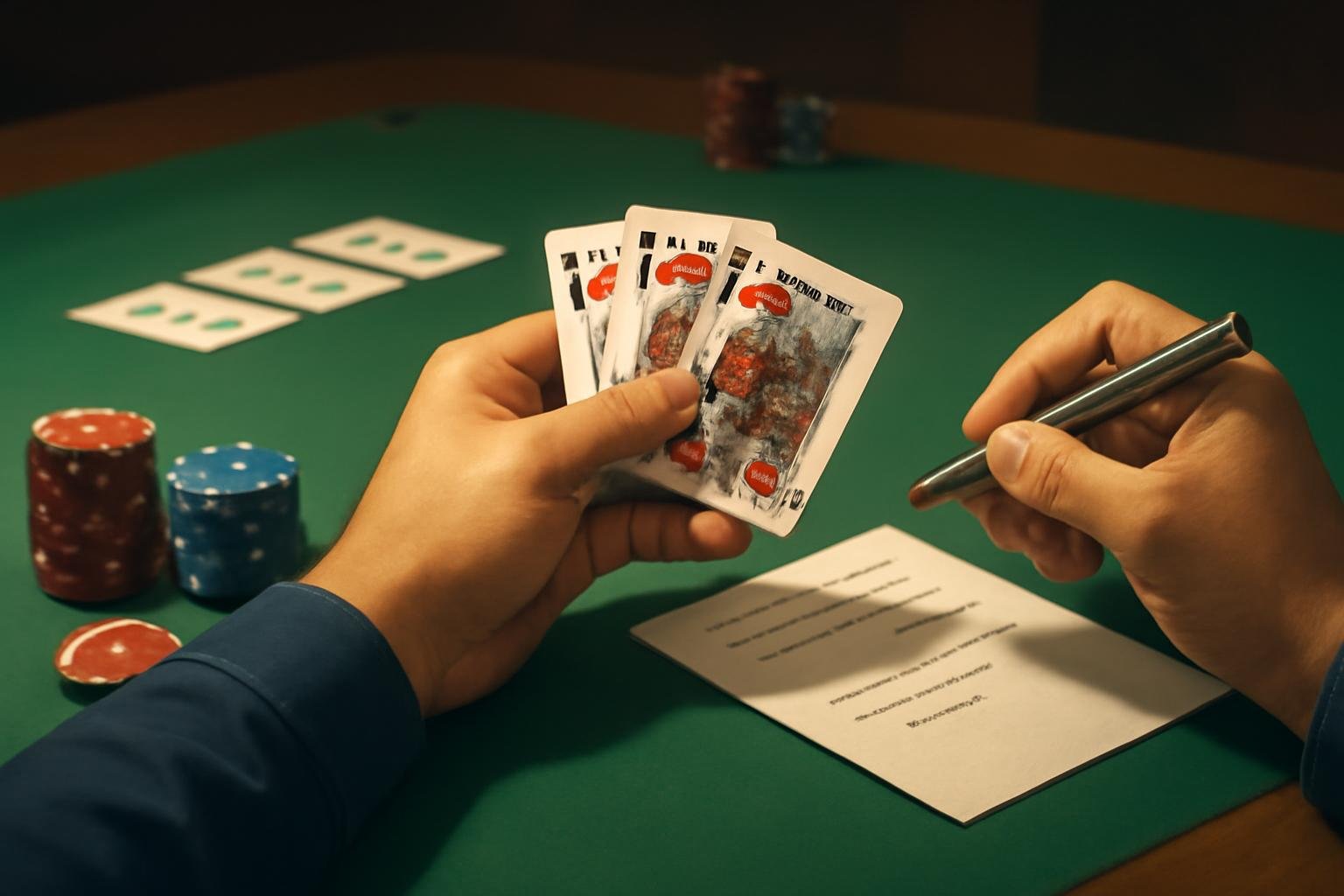
A hand can end in a win even when you made a poor decision, and a sound decision can still lose. That is why a useful poker review focuses on what you knew at the time—not just the cards revealed at the end. A simple, consistent process can help you spot recurring decision patterns without turning every session into hours of analysis.
This guide offers a practical, no-special-tools routine for reviewing hands after play. The goal is clearer thinking, not a promise of better results. Poker outcomes remain uncertain, and a review cannot remove that uncertainty.
Choose hands for a reason
Do not review only the biggest pots. Large losses can be memorable, but a small pot may reveal a repeated habit, such as calling too often from an early position or overlooking a possible raise. Select a manageable handful of hands and include different kinds of decisions.
- A hand where you were unsure whether to call, bet, raise, or fold.
- A pot where several players stayed in and the situation became hard to read.
- A hand that felt emotionally charged, whether you won or lost.
- A routine decision you make frequently, such as choosing which hands to play before the flop.
If you take notes during play, keep them brief: your position, the action, the approximate stack situation, and the decision you questioned. Avoid recording information in a way that distracts you from the game or violates the table’s rules.
Rebuild the decision, not the drama
Write down the action in order, street by street. Include your position, the number of players involved, the size of the pot if known, and what you did. Separate facts from assumptions. For example, “the opponent called on the flop” is a fact; “they must have a strong hand” is an interpretation.
Next, pause before looking at the final cards, if you have them recorded. Ask what information was available at each decision point. What hands might an opponent reasonably hold based on their position and actions? What possible draws or stronger hands were on the board? You do not need to assign precise probabilities when you cannot support them. Listing plausible possibilities is more useful than pretending to know an opponent’s exact cards.
Ask the same questions every time
Before the flop
Was your decision shaped by position, the action before you, and the effective stack sizes? Did you have a clear reason to enter the pot, or were you playing a hand simply because it looked attractive? For a focused refresher on common early-street errors, see five preflop mistakes that can drain a stack.
After the flop
What changed when the board appeared? Consider whether it connected with the kinds of hands each player could have. Ask what your bet was meant to accomplish: get called by weaker hands, make better hands fold, or protect a hand that could be outdrawn. If you cannot identify a purpose, that is worth noting for future review.
On later streets
Did new actions provide information that should have changed your plan? Check whether your decision still made sense after a turn card or an opponent’s bet. Avoid using the river card as proof that an earlier choice was right or wrong. Evaluate the decision using the information available when it was made.
Separate process from outcome
Label each hand with two short notes: one about the decision process and one about the result. For example: “I called without a clear reason” describes a process; “I lost the pot” describes an outcome. The first can guide a future adjustment. The second, by itself, cannot tell you whether the choice was sound.
It can also help to mark the confidence of your review as high, medium, or low. A decision may be difficult to assess if you lack the action details or are unsure how an opponent usually plays. Keeping that uncertainty visible is more honest than forcing a confident verdict.
Turn observations into one small practice goal
After reviewing your selected hands, look for a pattern rather than trying to fix everything at once. You might notice that you enter too many pots from poor positions, call bets without considering what hands could be ahead, or make rushed choices after a frustrating loss. Poker also puts pressure on emotional control; this article on emotional intelligence and poker decisions explores that side of play.
Choose one specific question to keep in mind next time. For instance: “Before calling, can I name weaker hands that would bet this way?” A single question is easier to apply than a long list of corrections. If you are still learning the basics, you can pair this routine with practical tips for poker novices.
A short review checklist
- Did I record the action accurately?
- Have I separated observed facts from guesses?
- Did I judge the choice using information available at the time?
- Have I identified one repeatable lesson rather than blaming the outcome?
Keep reviews brief and use them to understand decisions, not to chase losses or justify longer sessions. Set a time and spending limit for play, and step away if gambling stops feeling manageable. The most useful review ends with a clear question for next time—not a claim that any particular result is guaranteed.