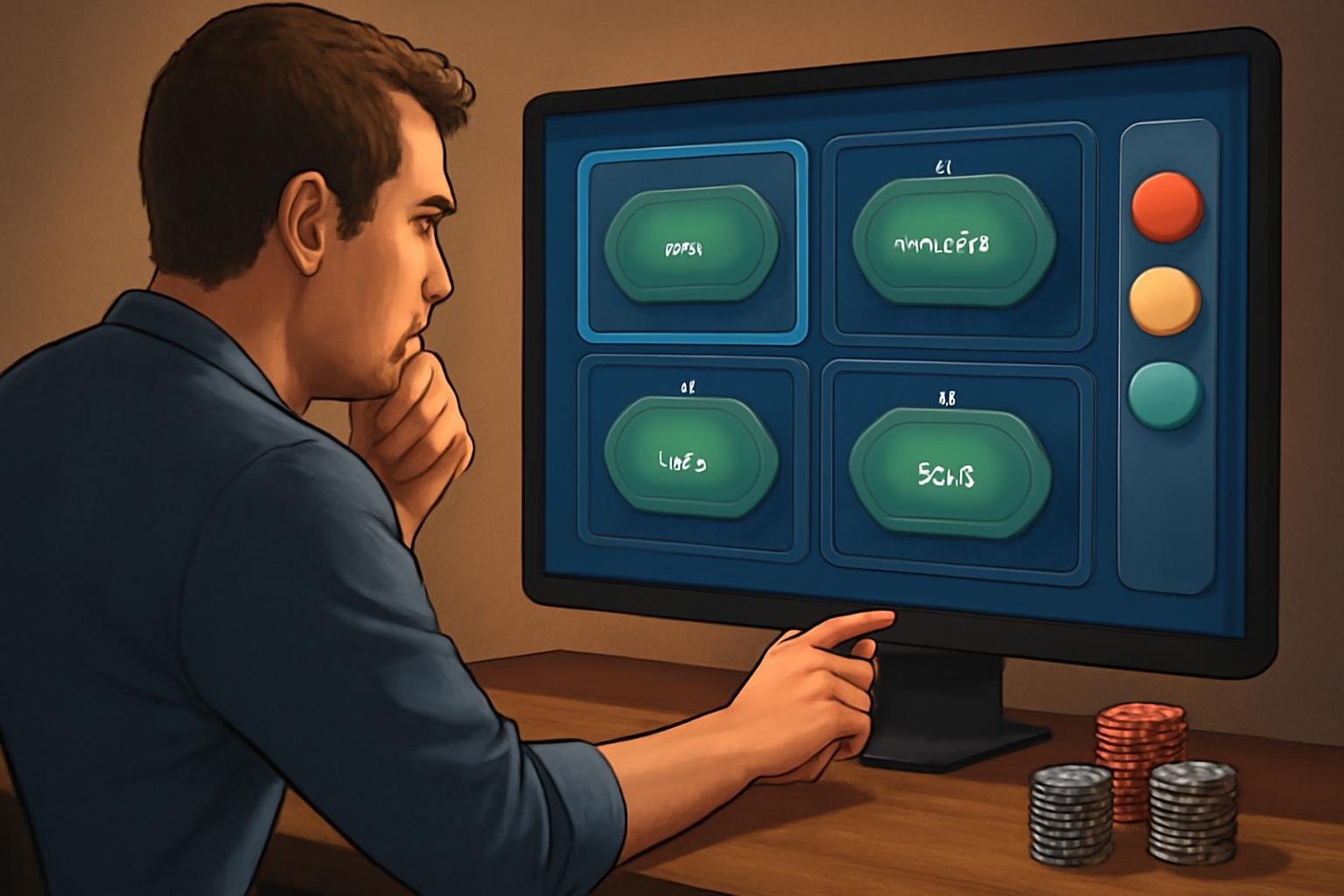
You open a poker client, see several tables running, and join the first one with an empty seat. A few hands later, you realise the stakes feel uncomfortable, the game moves too quickly, or you’re sitting in a spot that makes decisions harder. A short table check can help you avoid that mismatch.
This guide is about choosing a suitable online cash-game table, not finding a guaranteed edge. You’re looking for a game whose format, pace and stakes fit your experience and limits.
Start with the game and stakes
Check the game variant, betting structure and table size before you sit down. Texas Hold’em and Omaha require different starting-hand decisions, while a short-handed table tends to bring more frequent action than a full-ring game. If you’re still learning one format, don’t switch to another just because a seat is open.
Then check the blinds and any minimum or maximum buy-in. Pick stakes you can afford to lose without affecting bills, savings or other obligations. A table that seems manageable in theory may feel very different once several pots have gone against you. Decide your session limit before joining, and leave when you reach it.
Look at the table, not just the empty seat
Most poker clients show some combination of occupied seats, chip stacks and recent activity. These details can help you judge whether the table suits you, but they don’t reveal exactly how anyone plays. Treat them as basic context, not a read on an opponent’s skill.
- Stack sizes: Notice whether players have bought in for amounts similar to yours. A wide mix can make later-street decisions less familiar, especially if you’re used to playing with a particular stack depth.
- Seat availability: If possible, check where you’ll sit relative to the dealer button. Your position rotates, but starting immediately before or after a specific opponent can shape the first few hands you play.
- Game pace: A fast table can be a poor fit if you need time to think. Take a moment to check whether the interface and action speed let you make considered decisions.
- Table activity: A busy game isn’t automatically a good game for you. Look for a pace you can follow rather than assuming more action means better value.
Use a brief observation period
If the client allows you to watch before joining, use that time to understand the rhythm. Are hands reaching the flop often? Are players frequently raising before the flop? Does the game feel calm enough for you to keep track of the action? These observations won’t predict what happens next, but they can tell you whether the table is comfortable to follow.
Once seated, don’t judge the whole table from one hand. Give yourself a few rounds to learn the interface, note the positions and settle into the pace. If you’re unsure how to assess your own decisions afterward, this guide to reviewing poker hands without being fooled by the result offers a useful way to focus on what you knew at the time.
Know when to wait or leave
There’s no need to join a table just because it has a vacancy. Wait for a game at stakes you’ve chosen, or close the client and play another time. If the table becomes distracting, your attention slips, or you feel tempted to exceed your preset limit, leaving is a sound decision. You don’t owe a table another hand.
Before playing for money on any site, check the rules and terms that apply to you, along with the platform’s available account and play-limit controls. A basic guide to checking online casino trust and safety information can help you think through what to verify, but it isn’t a substitute for checking the relevant details yourself.
A simple pre-join checklist
- Is this the poker variant and table size I know?
- Do the stakes and buy-in fit the limit I set?
- Can I comfortably follow the table’s pace?
- Am I joining because the game suits me, not because I’m chasing a loss?
If you’re new to online play, revisit these practical basics for online poker novices before sitting down. The best table choice is often the one that lets you make clear decisions and stick to your plan, even if that means waiting for another seat.